Drone saves heart attack patient in Sweden
For the first time in medical history, a drone played an important role in saving lives during sudden cardiac arrest. The world-class feat occurred in Trollhättan, Sweden, in December of 2021, when Everdrone's...
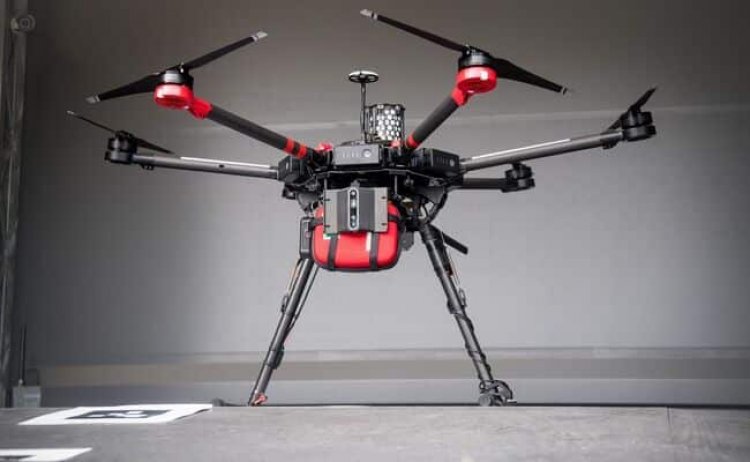
For the first time in medical history, a drone played an important role in saving lives during sudden cardiac arrest. The world-class feat occurred in Trollhättan, Sweden, in December of 2021, when Everdrone's self-driving drone delivered a life-saving pacemaker for a 71-year-old man.
The patient, who recovered, said: "This is a revolutionary technique that must be implemented everywhere." I cannot describe in words how grateful I am for this new technology and quick delivery of the defibrillator. Without the drone, I probably wouldn't be here.
Sudden heart attacks can happen to anyone, not just older adults with atherosclerosis. A person having a heart attack needs help within 10 minutes to survive.
Everdrone's Emergency Medical Air Delivery Service is designed to provide assistance as quickly as possible, as it allows emergency dispatchers to send a drone carrying the device to the caller's home, and begin the process of saving lives before the ambulance arrives home.
In this particular patient's case, it took services three minutes to deliver the defibrillator to his home. A bystander, who happened to be a doctor on his way to his job, used an automated external defibrillator on the patient after CPR was given.
Drone helps save the life of a cardiac arrest patient
The drone was developed in cooperation with the Center for Resuscitation Sciences at Karolinska Institutet, SOS Alarm and the Västra Götaland Region.
Mats Saleström, CEO of Everdrone, said: “This is a real-world example of how Everdrone's advanced drone technology, integrated with emergency dispatch, can reduce the time to access life-sustaining automated external defibrillator equipment.
The EMS has received 14 heart attack alerts that qualify for drone use. In a four-month pilot study.
In 12 of those cases, drones took off, and 11 succeeded in delivering pacemakers. Seven of these defibrillators were delivered before the ambulance arrived.
About 275,000 patients suffer cardiac arrest annually in Europe, with nearly 70 percent of these arrests occurring in a private home without a pacemaker on site. The survival rate is about 10 percent.
Currently, emergency medical air delivery can reach 200,000 Swedish residents. The company said it plans to expand to more locations in Europe this year.